His role after accession demands accountability while his own constitutional record strengthens Indian sovereignty
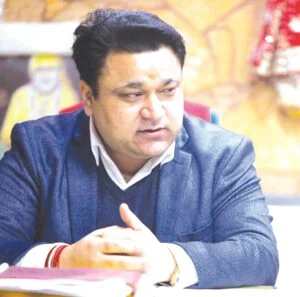
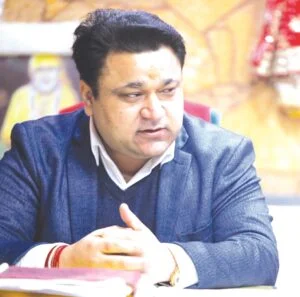
Shivang Satya Gupta
US Ambassador Sergio Gor’s reported meeting with Dr Karan Singh should be examined against the history that gives Singh his diplomatic significance. He helped implement the political and constitutional transformation of Jammu and Kashmir after accession. His present role as an elder statesman cannot be assessed fully without examining that record.
My concern is how that history is understood and conveyed to an American envoy with wider regional responsibilities. Respect for Karan Singh’s experience should include scrutiny of his decisions, their consequences and the conclusions that subsequent events actually support.
The starting point must be accurate. Maharaja Hari Singh signed the Instrument of Accession in October 1947. He appointed Sheikh Abdullah Prime Minister in March 1948. Karan Singh became Regent only on 20 June 1949. He therefore cannot fairly be credited with the original accession or made responsible for every decision preceding his regency.
The regency nevertheless marked a decisive transfer of authority. Hari Singh’s proclamation delegated his powers during an absence formally described as temporary and related to health. Karan Singh later recalled the political pressure surrounding his father’s departure and described what followed as lifelong exile. He was eighteen when he assumed responsibility; his father never returned alive.
The outcome matters for Jammu’s historical memory: the ruler who signed the accession lost the practical exercise of authority, while his son became the constitutional instrument through which the next political order operated. It establish that his public role was integral to the transition.
His authority was substantive. The Supreme Court’s decision in Prem Nath Kaul records that Karan Singh enacted the Big Landed Estates Abolition Act on 17 October 1950. Its purpose included transferring land to actual cultivators, and the Court upheld his competence to enact it. This major economic transformation preceded the elected Constituent Assembly of 1951.
Land reform must be assessed on its social merits, implementation and effects. The institutional point is that substantial change was made through powers inherited from the Maharaja before the new constitution-making body had been elected. Karan Singh was an active constitutional participant in that process, even though the reform programme was not his alone.
On 1 May 1951, he issued the proclamation establishing an elected Constituent Assembly. The National Conference ultimately occupied all 75 seats. Nehru’s letter of 21 October 1951 acknowledged criticism of the large number of uncontested returns, while defending the party’s strength. The absence of opposition representation is a documented feature of that founding process.
For me, this raises a lasting democratic question. Removing hereditary government did not, by itself, demonstrate that every region and political tendency had received an effective voice. Karan Singh’s proclamation enabled the process; responsibility for its electoral administration must be established separately. Jammu’s concerns should be assessed against the actual quality of participation, rather than dismissed by invoking democratisation.
The documentary record becomes particularly revealing in 1952. Nehru’s note of 3 June described proposals to remove Hari Singh, end hereditary succession and elect Karan Singh as head of state. The same note recognised the existing headship as a unifying influence and warned that abrupt change could have disturbing consequences, including in Jammu and Ladakh.
These concerns were therefore visible at the time. In November 1952, Karan Singh took office as Sadr-e-Riyasat under the new arrangement. His continued presence preserved a degree of personal continuity while hereditary rule ended. My criticism concerns the adequacy of the political settlement that replaced it: whether consultation and regional confidence were strong enough to sustain the promised transition.
The rupture of August 1953 is central to that assessment. In his letter of 8 August, Karan Singh informed Sheikh Abdullah that he had dissolved the Council of Ministers, citing serious Cabinet divisions. Bakshi Ghulam Mohammad replaced Abdullah, who was arrested in the early hours of 9 August.
Within a year of the new head-of-state arrangement, Karan Singh had removed the leader around whom the settlement had been built. Whatever view one takes of the necessity of that action, it demonstrated the fragility of the political accommodation. The lesson I draw is that confidence between prominent individuals cannot substitute for durable, representative institutions.
The record also shows continuing constitutional integration. In 1965, the Sadr-e-Riyasat was replaced by a Governor under the Sixth Amendment to the state Constitution, and Karan Singh continued as Governor. His career therefore encompassed both the creation of a distinctive constitutional office and its replacement by a structure closer to that operating elsewhere in India.
The most consequential implication for today, however, arises from his earlier proclamation of 25 November 1949. It accepted the Constitution of India as the basis of the state’s constitutional relationship with the Union and provided for inconsistent constitutional provisions to be superseded. This was a foundational act of integration.
In its December 2023 Article 370 judgment, the Supreme Court relied on that proclamation in rejecting continuing sovereignty for Jammu and Kashmir. It held that the proclamation achieved what a merger agreement would have achieved in this respect. The absence of a separate merger agreement did not preserve a separate sovereign status.
This is especially relevant because Karan Singh had stressed in Parliament in 2016 that Jammu and Kashmir had acceded but had not merged, while also affirming that it was an integral part of India. The Court’s later ruling explains why that historical distinction cannot sustain a claim to continuing sovereignty. His own constitutional act is part of that explanation.
Fairness requires recording his subsequent position too. In 2019 he recognised positive aspects of the constitutional changes; in December 2023 he welcomed the Supreme Court judgment and urged acceptance of the changed position. His record cannot honestly be reduced to an uninterrupted campaign against integration.
These established consequences give the Gor meeting its contemporary significance. Gor’s combined responsibilities as Ambassador to India and regional envoy have drawn concern from former Indian diplomats. His public advocacy of ending Indian purchases of Russian oil also illustrates that American strategic objectives can conflict with Indian choices. His favourable August 2026 remarks on Jammu and Kashmir deserve recognition alongside those differences.
I would expect a conversation drawing on Karan Singh’s historical experience to make India’s constitutional position unmistakable. His 1949 proclamation and the 2023 judgment provide strong grounds for doing so. His former offices give him experience; they do not confer a present mandate to negotiate on behalf of India.
The available account does not establish that Kashmir or mediation was discussed. Today’s meeting proves no concealed continuity with the political arrangements of the 1950s. The legitimate concern is whether diplomatic engagement is informed by the complete record, including the shortcomings of the early political settlement and the constitutional integration that followed.
From Jammu, I seek an honest accounting of that history. Hari Singh’s contribution to accession deserves its proper place. Karan Singh’s subsequent decisions deserve scrutiny alongside recognition of his contribution to integration. The perspectives of Jammu, Kashmir, Ladakh and displaced communities should inform historical understanding; no single individual can stand in for them all.
I would welcome a fuller account of what Karan Singh conveyed to Gor. India’s refusal of external mediation should remain clear, as the government reiterated in June 2025. Historical stature should help explain that position and the need for representative institutions within India.
The strongest lesson of Karan Singh’s career is the need to distinguish constitutional integration from the quality of political representation. India can firmly uphold its sovereignty while critically examining how power was exercised after accession. That is the standard I believe Jammu should bring to this discussion, and the standard by which this diplomatic engagement should be judged.