When activism turns against nation: Why Wangchuk’s “Shame On This Country” remark cannot be excused ?
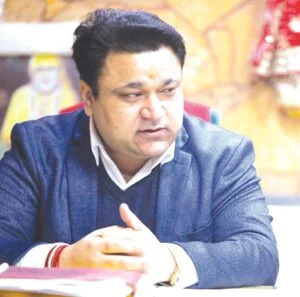
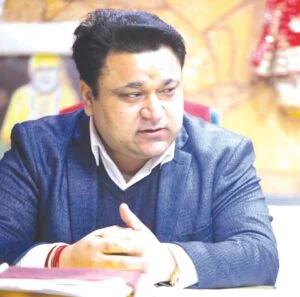
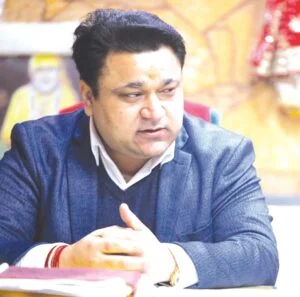
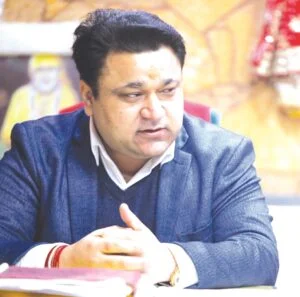
Public life demands accountability. The higher the moral pedestal one chooses, the higher the standard to which one is held. That is why Sonam Wangchuk’s recent statement—“धिक्कार है ऐसे देश पर…” (“Shame on such a country”)—deserves serious scrutiny.
The issue is not whether he fasted for 26 days. Nor is it whether he suffered physically. Those are matters that deserve empathy.
The issue is this: Can anyone who claims to speak for India’s future end up condemning India itself?
My answer is unequivocal—No.
Throughout his career, Sonam Wangchuk has carefully cultivated the image of an educator, environmentalist and moral voice above politics. Yet this latest episode exposes a contradiction that cannot be ignored.
Whenever questions were raised about the manner in which his hunger strike ended, instead of addressing those questions with evidence and transparency, he chose to attack the country itself.
Why?
If critics on social media made irresponsible allegations, then criticise those critics; If government officials acted unlawfully, challenge them before the courts; If ministers failed to meet commitments, expose those ministers. But why should Bharat become the accused?
This is not merely a rhetorical flourish. Words matter. India is not a social media platform; India is not a political party; India is not a ministry; India is not a government that changes every five years; India is a civilisation stretching back thousands of years and a constitutional Republic built upon the sacrifices of millions.
To say “Shame on this country” because some individuals questioned one’s integrity is a remarkable leap—one that reveals more about the speaker’s mindset than about the nation.
Ironically, while criticising India, Sonam Wangchuk simultaneously relied upon Indian constitutional institutions.
He approached the Delhi High Court; he sought constitutional remedies; he negotiated with Union Ministers; and he expected the State to honour legal commitments.
In other words, when he sought justice, he trusted the very constitutional framework of the Republic he later condemned.
That contradiction deserves reflection.
A democracy is noisy. It is often unfair. Public figures are criticised, sometimes unfairly. That is the price of public leadership. No one receives immunity from public questioning merely because they have undertaken a hunger strike. Public trust is earned not by demanding emotional acceptance but by answering difficult questions with facts.
Equally troubling is the tendency to portray every disagreement as proof that the nation itself has failed. This narrative has become increasingly familiar.
Whenever institutions disagree, India is portrayed as intolerant; whenever criticism emerges, India is portrayed as oppressive; and whenever difficult questions are asked, the country itself becomes the villain.
Such sweeping narratives may attract headlines, but they do little to strengthen democracy.
India’s constitutional tradition teaches exactly the opposite.
Governments are accountable; officials are accountable; and the ministers are accountable.
The nation is not.
There is a profound difference between opposing a government and denouncing the country. Responsible public leadership understands that distinction.
Those who genuinely love India fight to improve her institutions without diminishing her civilisational dignity.
India has produced scientists, teachers, soldiers, entrepreneurs, farmers, labourers and countless ordinary citizens who quietly strengthen the Republic every single day. They cannot be held responsible for the behaviour of a handful of critics or officials.
Criticism of authority is patriotic. Demanding accountability is democratic.
But declaring “Shame on this country” crosses a line that thoughtful public discourse should never cross.
History remembers leaders not merely for the causes they champion but also for the words they choose. When disappointment turns into condemnation of one’s own nation, moral authority begins to erode. India deserves better.
And those who aspire to lead public opinion must remember a simple constitutional truth: Governments may fail; politicians may disappoint; and the institutions may require reform.
But Bharat is greater than all of them.