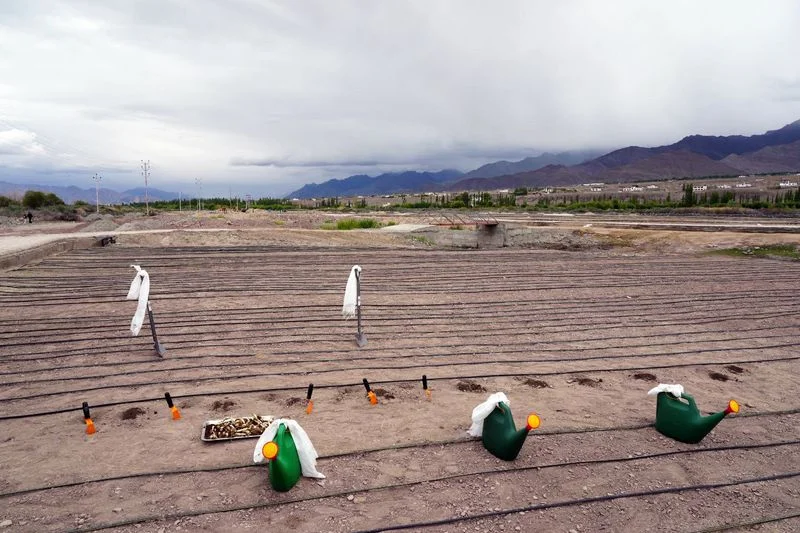
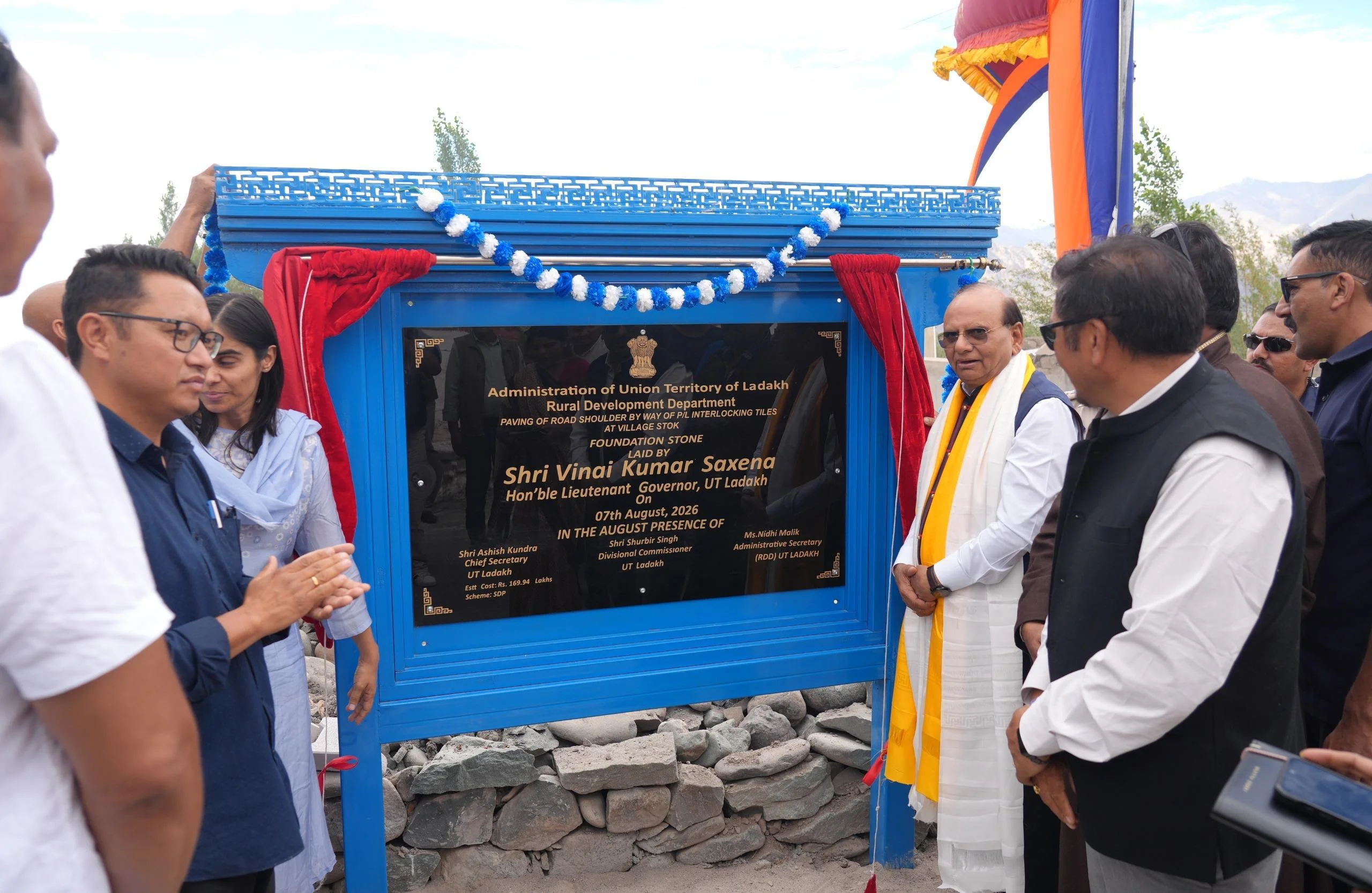
Leh: Continuing his focus on integrated and people-centric development of Ladakh’s heritage villages, Lieutenant Governor, Shri Vinai Kumar Saxena, laid the foundation stone for a series of infrastructure and water conservation projects in Stok village, in Leh. The initiative aims to strengthen water security, improve agricultural productivity, enhance village infrastructure, create sustainable local livelihoods, and develop Stok as a major cultural and eco-tourism destination.
Located at the foothills of the iconic Stok Kangri, Stok is one of Ladakh’s treasured heritage villages and a living symbol of the region’s rich culture, traditions, history and natural beauty. During his visit to Stok on March 26, the Lieutenant Governor had announced the adoption of Stok village as a model village that is self-reliant, culturally vibrant and sustainable.
Emphasizing that development must go hand in hand with the preservation of heritage, L-G Shri Saxena also launched works under the Beautification of Stok Village – Phase-I. Road shoulder paving using interlocking tiles will be undertaken at a cost of ₹1.70 crore, improving the durability and aesthetics of village roads.
The historic Oracle Path will also be developed through tiling at a cost of ₹1.50 crore, making access to important historical and religious sites safer and more convenient for both residents and visitors. In addition, a modern Signage System, at a cost of ₹7 lakh, will provide wayfinding and visitor information while highlighting Stok’s historical and cultural significance.
The initiatives are aimed at creating a virtuous cycle of development in which water conservation strengthens agriculture, improved village infrastructure enhances tourism, and increased tourism generates new livelihood and employment opportunities for local youth and women.
Speaking on the occasion, the Lieutenant Governor said that Stok was not merely a village but a living symbol of Ladakh’s rich heritage, culture, traditions and natural beauty, and expressed confidence that it could emerge as a major cultural and eco-tourism destination.
“Development is meaningful only when it makes people’s lives easier and secures the future. Our objective is not merely to build infrastructure, but to ensure that development and heritage move forward together. When we conserve water, agriculture becomes stronger; when our villages become more beautiful and accessible, tourism grows; and when tourism grows, new opportunities for employment and livelihoods are created for our youth and women. With the cooperation and participation of the people, I am confident that Stok will emerge as one of Ladakh’s most beautiful, clean, prosperous and model heritage villages,” said L-G Shri Saxena.
A key component of this development journey is water conservation. The Phikar Pond, inaugurated and operationalised by the Lieutenant Governor on April 17 under the Him Sarovar Project, is irrigating around 300 kanals of agricultural land, benefiting nearly 50 per cent of Stok’s households and strengthening agricultural productivity.
The Lieutenant Governor also laid the foundation stone for the remodelling of Zingok Pond, which currently suffers from leakages and limited capacity. The project will increase its storage capacity from 3.4 million litres to 6.4 million litres, enabling irrigation of almost the entire agricultural area of Stok.
L-G Shri Saxena reiterated that the integrated development of Stok reflects the Administration’s approach of ensuring that modern infrastructure and improved public amenities progress alongside the preservation of Ladakh’s distinctive cultural identity and heritage.