CJP and Dhruv Rathee must answer for the distance between the evidence they cite and the certainty of the accusation they promote
The central weakness in the vote chori campaign is the distance between the examples offered and the certainty of the conclusion announced. A wrongly excluded voter deserves a remedy. An unexplained discrepancy demands investigation.
Neither automatically establishes that a named official deliberately stole votes.
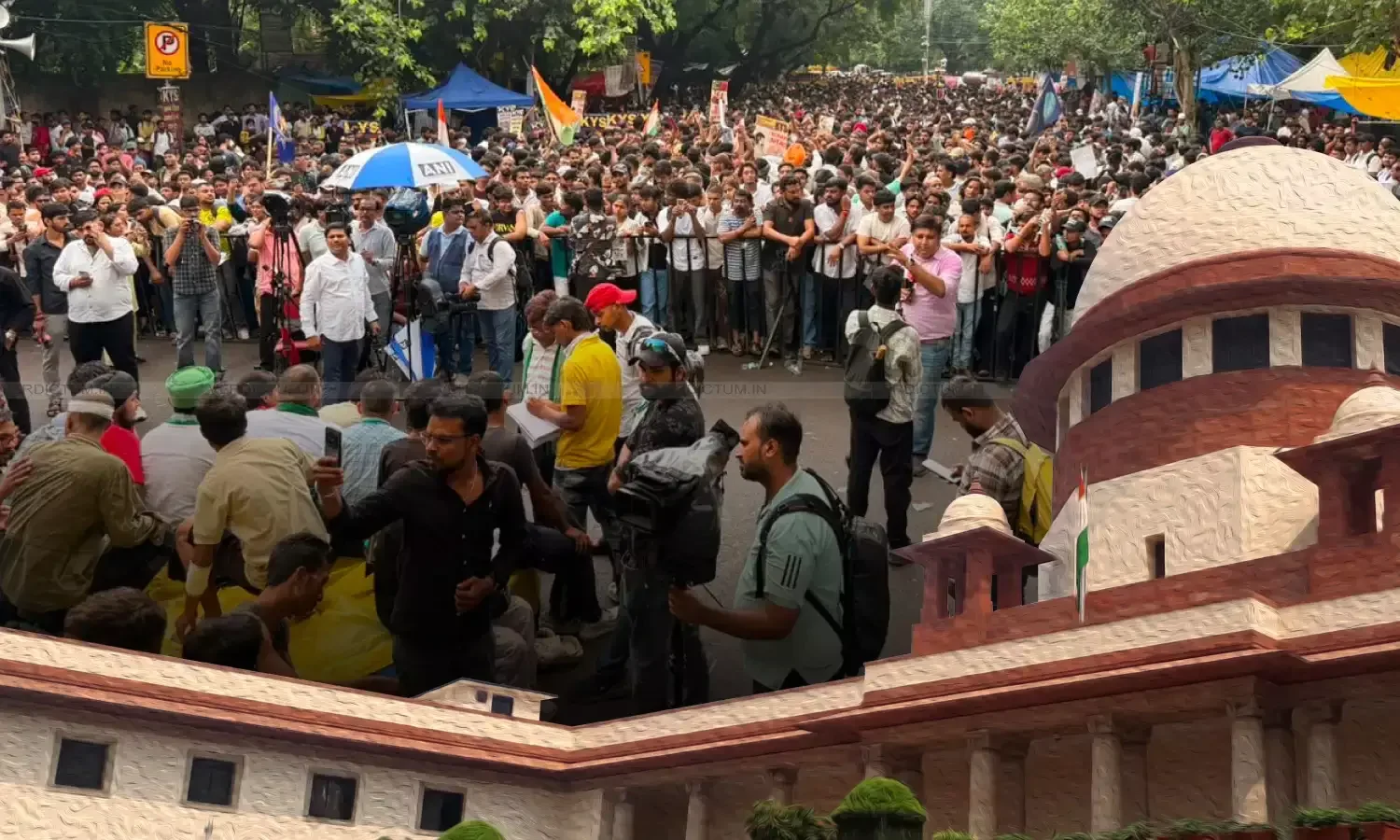
Dhruv Rathee’s reported Bengaluru speech on 8 October cited West Bengal, Bihar and Uttar Pradesh, with a further reference to Goa, while demanding Chief Election Commissioner Gyanesh Kumar’s resignation. The theft allegation was carried into the protest’s slogan. That is the political leap this debate must examine: from evidence of possible or actual failure to a verdict about intention and personal responsibility.
The campaign deserves the same scrutiny it demands of the Election Commission. Public anger cannot substitute for the evidence needed to sustain its most serious charge.
CJP has a political programme to defend
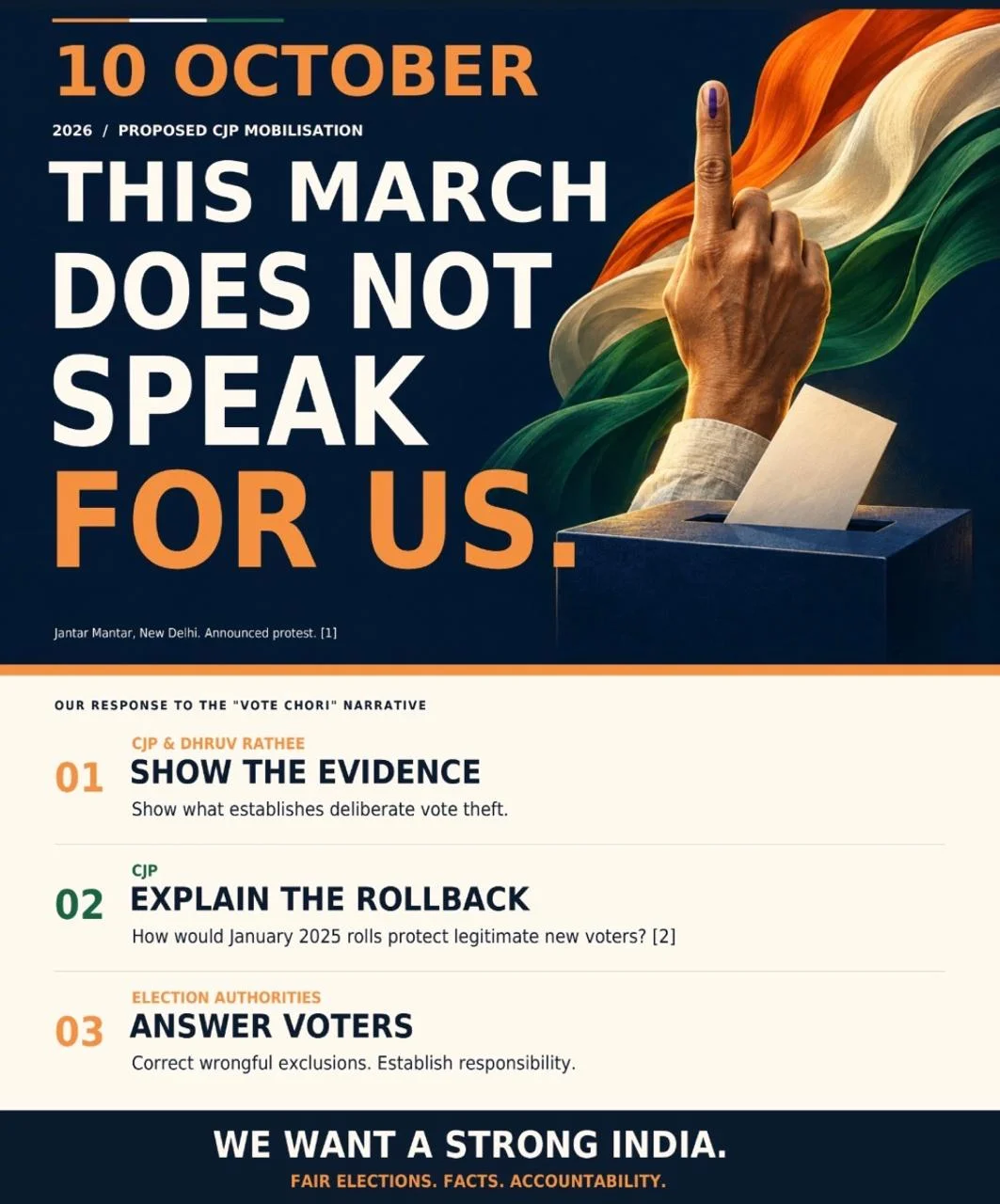
At its 24 September press conference, the Cockroach Janta Party (CJP) sought a halt to upcoming elections, a freeze on Special Intensive Revision of electoral rolls, or SIR, and restoration of the January 2025 rolls. It also demanded Kumar’s resignation, criminal proceedings against him and replacement of the 2023 law governing Election Commissioner appointments.
Those demands extend well beyond correcting individual names. They seek changes to the leadership, legal framework and conduct of elections. Each proposal needs its own justification. Voter grievances do not automatically establish the necessity or soundness of every political remedy advanced in their name.
The language of CJP’s demands is revealing. Asking who issued “orders to steal votes” assumes that deliberate theft has already been established. An investigation must test that premise. Framing a question around an assumed crime does not prove the crime.
The proposed rollback also requires a practical answer. How would citizens who became eligible or registered after January 2025 remain protected? How would legitimate additions and address changes be retained? A movement invoking voting rights should explain how its own proposed remedy safeguards those rights.
Rathee must account for the certainty of his language
Rathee has denied seeking a change of government. Demanding the CEC’s resignation does not contradict that denial. But a campaign about who leads the electoral institution and how it operates is still political advocacy. Its stated public purpose does not exempt its claims from examination.
His reported assertions of “zero transparency” and “zero accountability” illustrate the problem. Published rolls, RTI disclosures, court proceedings and official responses form part of the record. The campaign is drawing on some of that very material to make its case.
That does not make the record satisfactory. In Bihar, the Supreme Court had to require additional public disclosure of omitted names and reasons. Some answers remain inadequate; aggregate figures cannot resolve questions about particular decisions or software controls. These are substantial criticisms.
But an inadequate explanation is not a nonexistent explanation. The useful questions concern what was disclosed, when it was disclosed, whether citizens could use it and what remains unanswered. The word zero replaces those distinctions with an impression of complete institutional darkness.
The complete timeline changes the argument
Bihar demonstrates why a political argument must carry the judicial record forward. The Supreme Court’s 14 August 2025 disclosure order belongs in the account. So does its 27 May 2026 final judgment upholding the challenged Bihar SIR exercise while preserving remedies for erroneous exclusions.
That judgment does not certify every individual deletion or approve every later online alteration. The subsequent controversy over modified Form 6 must be examined separately. But an interim demand for stronger safeguards cannot be presented as though it settled the entire exercise’s legality against the Commission.
Goa provides another test. The original software failure deserved scrutiny. An official update, reported on 2 October, said 88 of the 97 identified people had been included in the rolls. A current account must carry that development. Restoration cannot erase an earlier injury, but leaving out the update can distort the present position.
Uttar Pradesh requires comparable figures. The Reporters’ Collective cited 71.38 lakh publicly displayed applications and separately identified 16.18 lakh earlier applications. If those are distinct, comparable groups, their combined 87.56 lakh exceeds the reported 84.30 lakh additions. This arithmetic does not validate the roll; overlaps, dates, decisions and disclosure obligations still require reconciliation. It does show why the publicly displayed subset alone cannot prove that additional electors never applied.
An incomplete public list of applications is a transparency issue. Establishing fictitious voters requires checking the people, applications and decisions. Treating those two propositions as interchangeable gives a discrepancy more evidentiary weight than it can carry.
Bengal requires responsibility to be traced
The reported 75,443 inclusion outcomes among 82,782 decided Bengal appeals demand a serious explanation of the original decisions. They are grounds for scrutiny. They do not, by themselves, establish a deliberate operation directed by the CEC.
The Supreme Court’s 13 April order recorded adjudication by serving judicial officers and appeals before tribunals of former High Court judges and Chief Justices. It also said a pending appeal did not itself entitle an excluded person to vote. These decisions form part of the sequence that any allegation of responsibility must address.
A successful appeal can expose an earlier injustice. The investigation must then establish its cause: defective material, an erroneous decision, delay, improper instructions or deliberate interference. The actual orders and any challenges to inclusion decisions need examination. A theft slogan supplies none of those missing links.
An investigation is not a licence for every political inference
The Indian Express reported serious internal objections and procedural disputes. Its main investigation also stated that there was no evidence of SIR’s role in Bengal’s election outcome. The newspaper subsequently carried the Election Commission’s defence. Those qualifications and responses belong in any fair use of its reporting.
The Commission’s defence does not settle every allegation. Nor does an absence of demonstrated impact on the winner make wrongful exclusion acceptable. But documentary evidence of institutional concern cannot automatically establish personal intent, partisan benefit or the scale of electoral theft alleged in a campaign.
A report can be credible while the political conclusions drawn from it are exaggerated. Campaigners who invoke a newspaper’s authority should preserve the limits of its findings. The newspaper should keep those limits prominent when its investigation becomes the foundation of a public accusation.
Accountability must apply to the campaign as well
The weakness in this argument is clear. Different failures are grouped beneath a single accusation, although each requires its own explanation. Absolute language outruns a mixed record. Later developments that qualify the charge must enter the assessment. Political remedies require a justification beyond the examples offered to support them.
The Election Commission must answer specific questions about exclusions, disputed authorisations, software access and delays. It should disclose the relevant decision records and explain how eligible citizens obtain effective remedies. Invoking the scale of the exercise or issuing a general denial cannot answer every documented complaint.
CJP and Rathee, in turn, must identify which facts are established, which are contested and which conclusions they are asking the public to infer. They should explain the safeguards in their proposed remedies and include material developments that qualify the charge. Claiming to speak for voters brings a responsibility to inform them accurately.
A resignation demand is a political judgment; it need not await a criminal conviction. Calling an official responsible for deliberate vote theft is a factual accusation requiring evidence. Keeping that distinction clear strengthens democratic criticism.
The political rhetoric deserves exposure precisely where it turns evidence requiring investigation into a verdict that prejudges the investigation’s central question. Wrongfully excluded voters deserve justice. They also deserve a public debate in which their injuries are examined carefully and accusations acquire authority through proof.