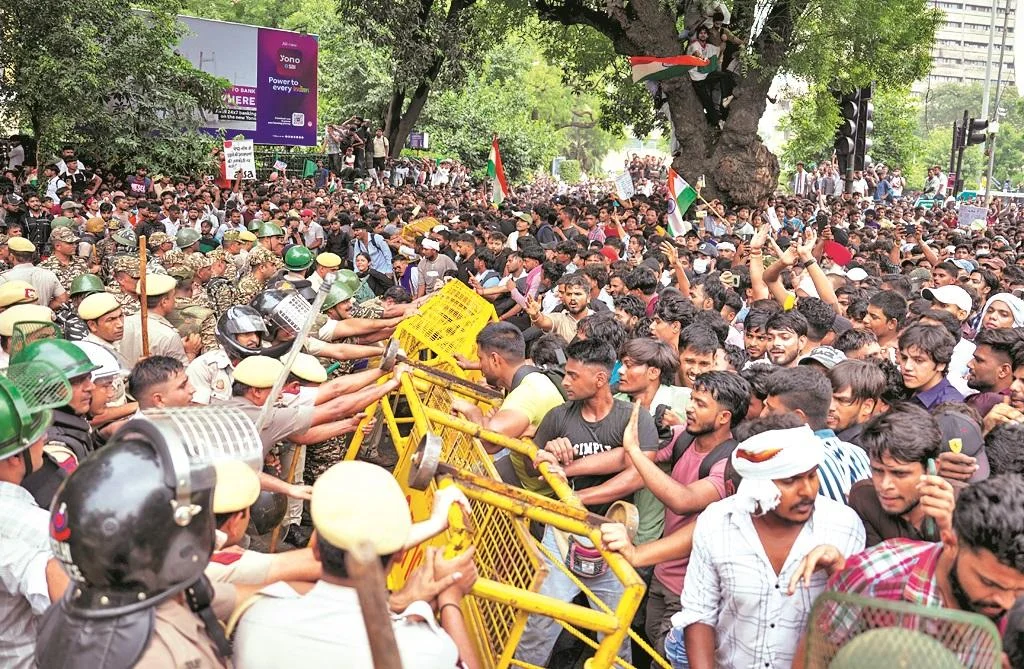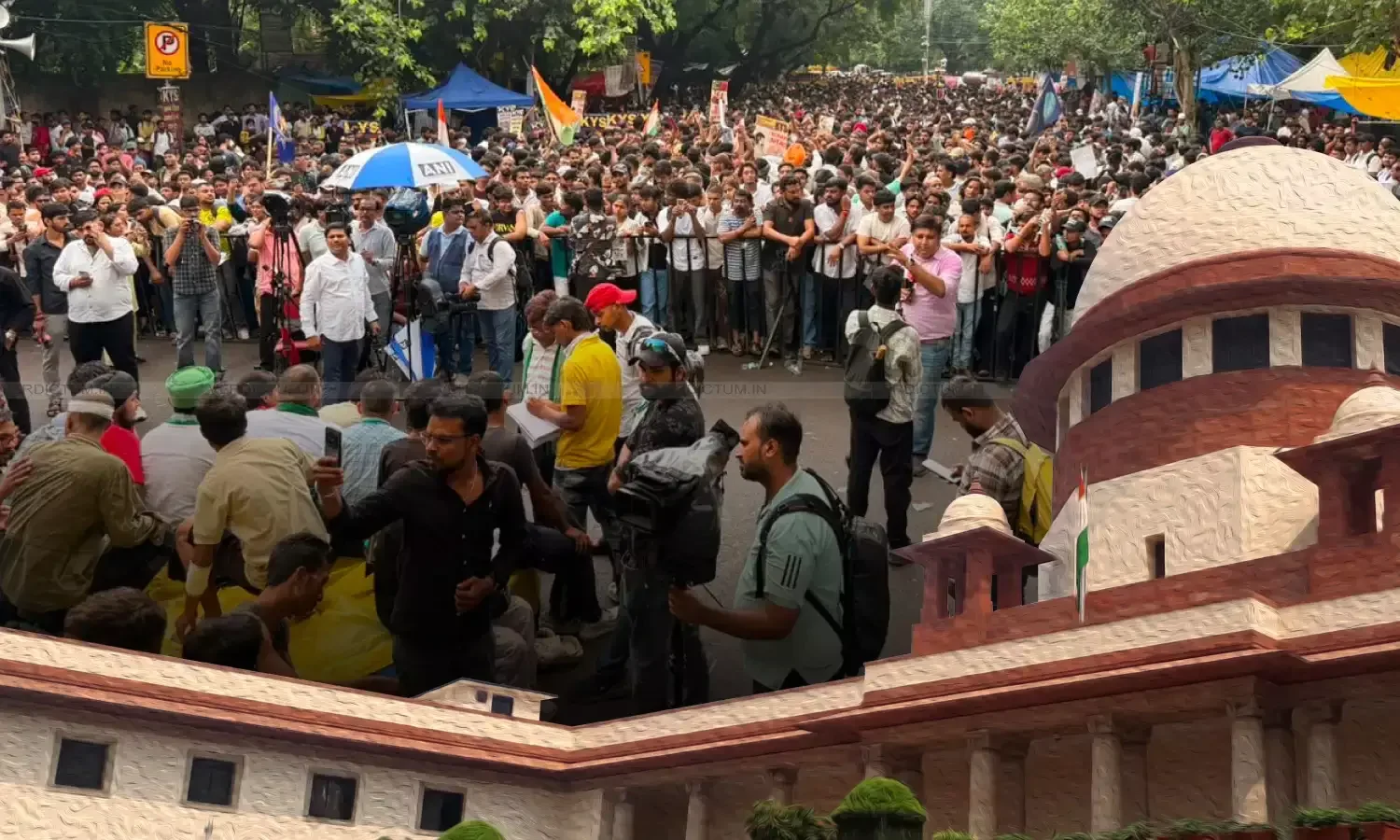
NEW DELHI, Oct 11: The Supreme Court on Sunday issued a series of directions concerning restrictions on public movement, transport services and peaceful assemblies in Delhi amid the Cockroach Janta Party (CJP) protest, while issuing notice to the Centre on a plea seeking contempt proceedings over the alleged violation of its earlier directions.
A special bench comprising Justices Joymalya Bagchi and V Mohana emphasised that people gathering peacefully must not be detained illegally and that any detention must strictly follow the procedure established by law.
The court directed the restoration of normal Delhi Metro and railway services, observing that restrictions on these services would be permissible only when justified under Article 19(2) of the Constitution.
It also directed that internet services be restored, subject to applicable law and law-and-order considerations.
On public movement, the bench said people should be allowed to move freely, subject to traffic regulations, and directed authorities to review the need for barricades.
The court further stressed that lawyers, journalists and other professionals must not be prevented from discharging their professional duties.
Emphasising the right to peaceful assembly, the bench said demonstrations must be permitted in accordance with the law, particularly in areas where prohibitory orders under Section 163 of the Bharatiya Nagarik Suraksha Sanhita (BNSS) are not in force.
It also directed that any notice board announcing restrictions under Section 163 near the Supreme Court be removed, if still in place, to ensure unhindered access to the apex court and other courts.
The bench said habeas corpus petitions alleging mass detentions, along with connected matters, would be heard with the main cases on October 13.
At the same time, the court reminded protesters that demonstrations must remain peaceful and should not involve instigating others.
Reaffirming its constitutional responsibility, the Supreme Court observed that it was duty-bound under Article 32 to protect and enforce fundamental rights.
The directions came amid heightened restrictions in the national capital linked to the CJP protest. The contempt plea concerns alleged non-compliance with the court’s directions regarding metro and train services in Delhi.
The court’s notice to the Centre seeks a response to the allegations; the issuance of notice does not, by itself, establish contempt or a finding of wrongdoing.