New Delhi, Sep 13 : The BRICS grouping on Saturday strongly condemned the April 22, 2025 Pahalgam terror attack in Jammu and Kashmir that killed 26 people, and backed India's call for zero tolerance towards terrorism in all its forms and manifestations.
Adopting the New Delhi Declaration by consensus at the 18th BRICS Summit, the grouping reaffirmed its commitment to combating terrorism, including cross-border movement of terrorists, terror financing and the existence of safe havens.
The BRICS leaders stressed that terrorism should not be associated with any religion, nationality, civilisation or ethnic group and called for all those involved in terrorist activities and their support networks to be held accountable and brought to justice in accordance with national and international law.
"We urge to ensure zero tolerance for terrorism and reject double standards in countering terrorism," the declaration said.
The grouping also emphasised that combating terrorism remains the primary responsibility of states and that international efforts to prevent and counter terrorist threats must comply fully with international law and the UN Charter.
New Delhi Declaration adopted by consensus
The adoption of the declaration came after intensive negotiations among member countries over the escalating conflict in West Asia. The final document expressed deep concern over rising tensions in the region and called for maximum restraint, dialogue and diplomacy to achieve lasting peace and stability.
The declaration urged the protection of civilians and civilian infrastructure and stressed respect for the sovereignty and territorial integrity of states.
The BRICS grouping also expressed deep concern over continued violence in Gaza and called for an end to policies aimed at forcibly displacing Palestinians. It reaffirmed that a lasting solution to the Israeli-Palestinian conflict should be achieved through peaceful means and respect the legitimate rights of the Palestinian people.
BRICS opposes unilateral sanctions
The grouping voiced serious concern over the rise of trade-restrictive measures, including tariffs, non-tariff barriers and protectionist policies, warning that such actions could disrupt global trade and supply chains.
BRICS also opposed unilateral coercive measures and economic sanctions that it said were contrary to international law and had far-reaching consequences.
The declaration called for greater cooperation among member states to address global economic and geopolitical challenges.
Modi unveils 10-point roadmap
Prime Minister Narendra Modi, addressing the summit, called for a greater role for the Global South in shaping global governance and proposed a 10-point roadmap for reforms under the BRICS framework.
He said the existing "pyramid of privilege" in global governance should give way to a "platform of partnership".
Modi said the roadmap should focus on representation, responsiveness and rule-making, with reforms to institutions such as the United Nations Security Council and international financial bodies.
He stressed that countries driving global economic growth should have an appropriate role in shaping global economic governance.
The Prime Minister also called for equal participation in framing global rules in emerging areas such as artificial intelligence, cyberspace, outer space, biotechnology and other critical technologies.
"We must strive to transform the Global South from a 'rule-follower' into a 'rule-shaper'," he said.
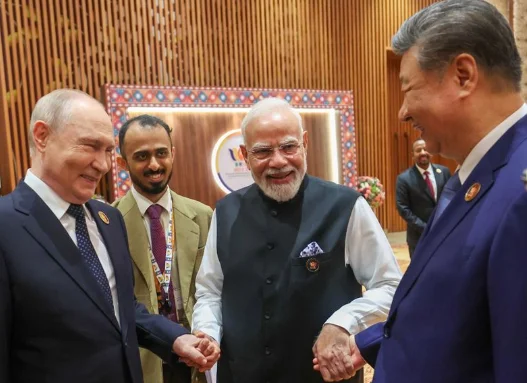
The summit was attended by several world leaders, including Russian President Vladimir Putin, Chinese President Xi Jinping, Iranian President Masoud Pezeshkian, South African President Cyril Ramaphosa and other leaders of the expanded BRICS grouping.
The declaration also expressed concern over global drug abuse and trafficking and welcomed the Guwahati Declaration adopted by BRICS Heads of Anti-Drug Agencies to strengthen operational and technical cooperation among member countries.